Origin Story
From sacred plains to 'dialect' checkbox
Different Ancestors, Different Languages
Awadhi and Hindi do not share a parent language. They descend from different Prakrit branches and diverged over a thousand years ago.
“Calling Awadhi a 'dialect of Hindi' is roughly equivalent to calling Portuguese a 'dialect of Spanish'”
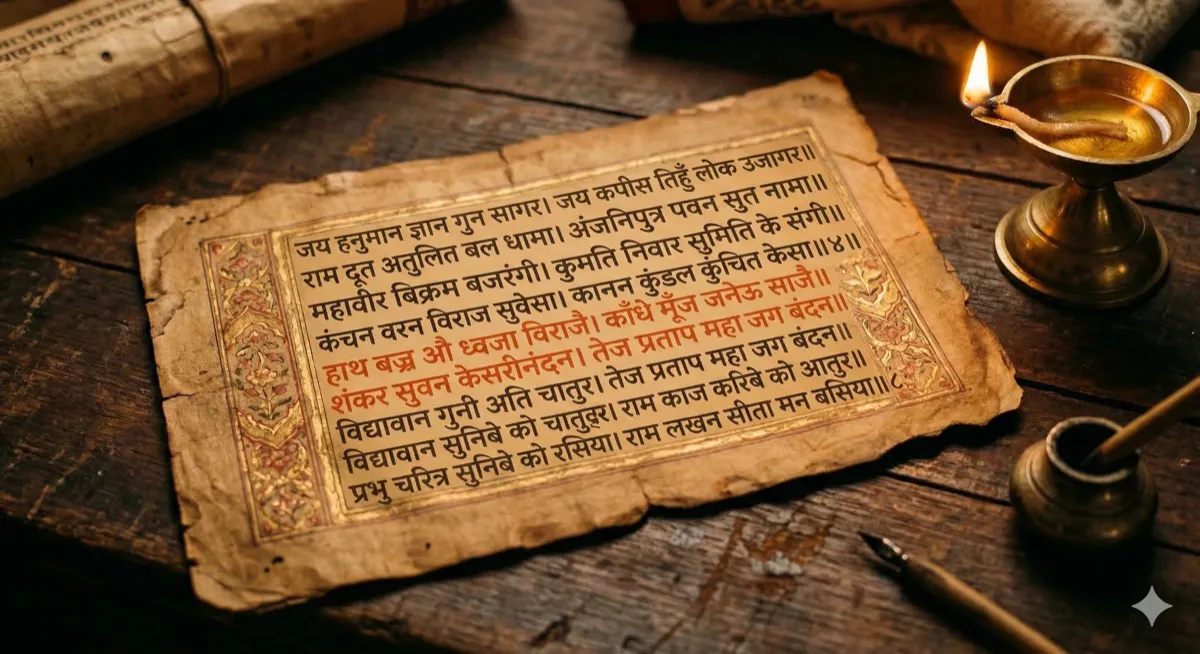
The Golden Age
From 1379 to 1625, two great literary streams flowed through Awadhi: Sufi mystics writing Hindu love stories, and Bhakti poets retelling sacred epics. Muslim and Hindu traditions chose the same language.
The Sufi Premakhyan Tradition
Chandayan
Maulana Da'ud
The first major Awadhi literary work. Inaugurates the Sufi premakhyan tradition: Eastern Sufis choosing Awadhi to reach common people with Hindu love stories infused with Sufi mysticism.
Mirigavati
Qutban
Continues the premakhyan tradition of writing Hindu love stories in Awadhi with Sufi philosophical underpinnings. A testament to the cross-cultural synthesis of the golden age.
Padmavat
Malik Muhammad Jayasi
A blind Muslim Sufi mystic writes a Hindu Rajput romance in Awadhi that travels from Myanmar to the Deccan. Inspired 12+ adaptations across centuries.
Madhumalati
Manjhan
Another major premakhyan continuing the remarkable literary synthesis where Muslim poets chose a Hindu vernacular to express Sufi truths through Hindu narrative traditions.
The Bhakti Devotional Movement
Bijak
Kabir
The weaver-poet's collected verses challenge caste, dogma, and religious orthodoxy in Awadhi-inflected verse. His words are still sung by millions across traditions.
Ramcharitmanas
Goswami Tulsidas
12,800 lines that changed Indian civilization. 108.7 million copies from one press alone. UNESCO Memory of the World. Present in virtually every Hindu household across North India.
The Full Timeline
From Prakrit roots to literary golden age
Emergence from Ardhamagadhi Prakrit
Awadhi crystallizes as a distinct language from its Ardhamagadhi Prakrit and Eastern Apabhramsha ancestors, spoken across the Gangetic plains of the Awadh region.
Emergence from Ardhamagadhi Prakrit
Awadhi crystallizes as a distinct language from its Ardhamagadhi Prakrit and Eastern Apabhramsha ancestors, spoken across the Gangetic plains of the Awadh region.
Chandayan by Maulana Da'ud
The first major literary work in Awadhi inaugurates the Sufi premakhyan tradition: Eastern Sufis choosing Awadhi to reach common people with Hindu love stories infused with Sufi philosophy.
Chandayan by Maulana Da'ud
The first major literary work in Awadhi inaugurates the Sufi premakhyan tradition: Eastern Sufis choosing Awadhi to reach common people with Hindu love stories infused with Sufi philosophy.
Padmavat by Malik Muhammad Jayasi
A Muslim Sufi mystic writes a Hindu Rajput romance in Awadhi. The epic traveled from Arakan to the Deccan, inspiring 12+ adaptations across centuries.
Padmavat by Malik Muhammad Jayasi
A Muslim Sufi mystic writes a Hindu Rajput romance in Awadhi. The epic traveled from Arakan to the Deccan, inspiring 12+ adaptations across centuries.
Ramcharitmanas by Tulsidas
The work that changed everything. 12,800 lines retelling the Ramayana in Awadhi, now with 108.7 million copies from one press alone. UNESCO Memory of the World.
Ramcharitmanas by Tulsidas
The work that changed everything. 12,800 lines retelling the Ramayana in Awadhi, now with 108.7 million copies from one press alone. UNESCO Memory of the World.
First Ramlila by Megha Bhagat
Tulsidas's student institutionalizes Awadhi theater, dramatizing the Ramcharitmanas. Ramlila is now UNESCO Intangible Cultural Heritage, performed across India annually.
First Ramlila by Megha Bhagat
Tulsidas's student institutionalizes Awadhi theater, dramatizing the Ramcharitmanas. Ramlila is now UNESCO Intangible Cultural Heritage, performed across India annually.
Fort William College chooses Khari Boli
The British East India Company's Fort William College selects Khari Boli, not Awadhi, as the basis for a standardized "Hindustani." A decision that would reshape the linguistic destiny of half a billion people.
Fort William College chooses Khari Boli
The British East India Company's Fort William College selects Khari Boli, not Awadhi, as the basis for a standardized "Hindustani." A decision that would reshape the linguistic destiny of half a billion people.
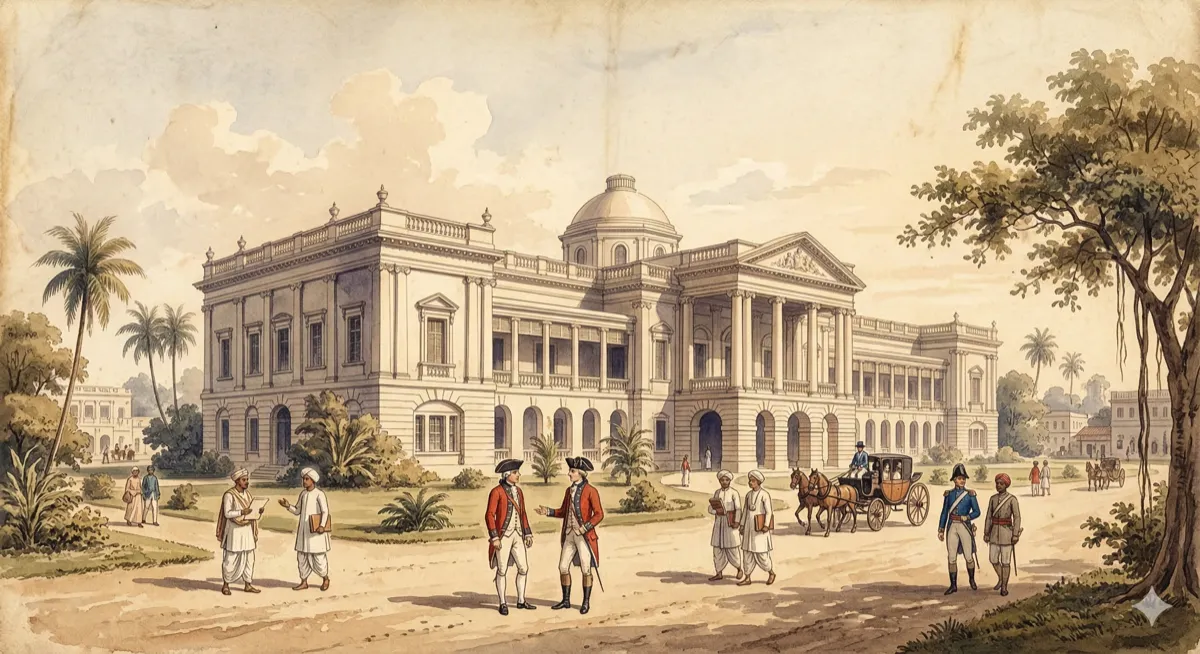
“Had Fort William College chosen Awadhi as the basis for standardized Hindi instead of Khari Boli, the linguistic identity of 500+ million people would be fundamentally different today.”