Curiosities
Things that will surprise you
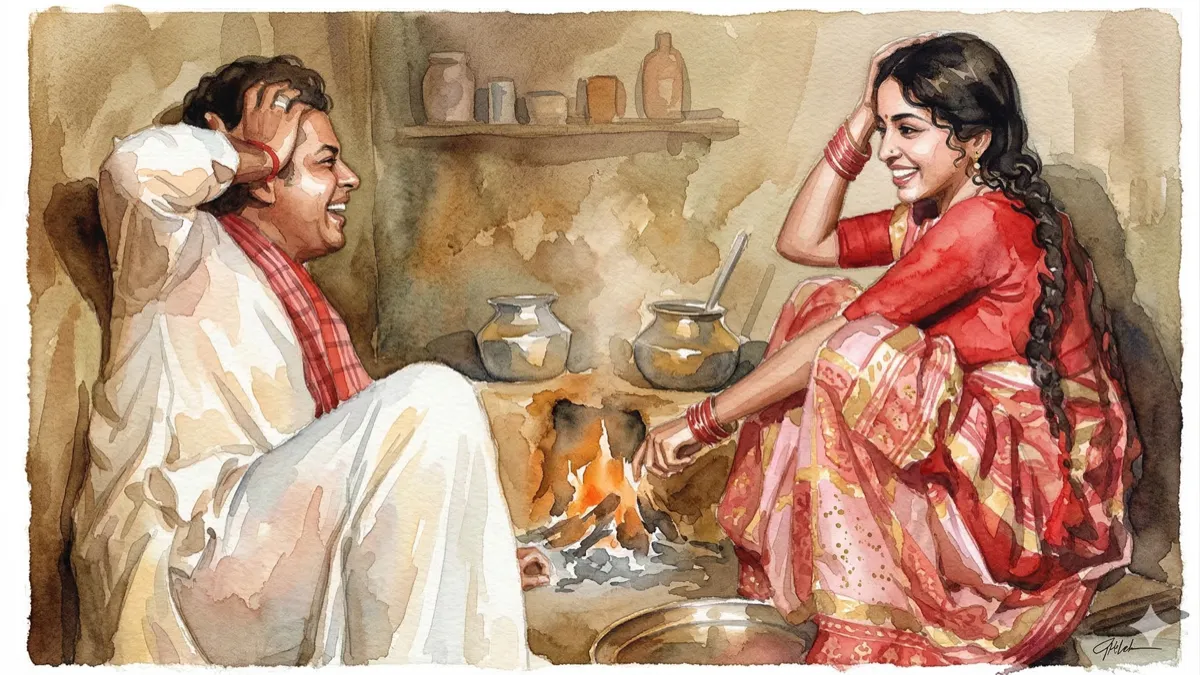
Hundreds of millions chant Awadhi daily, and don't know it
Religiontap to revealThe Hanuman Chalisa, recited daily by an estimated 100 million+ Hindus worldwide, is written entirely in Awadhi by Tulsidas. Most devotees assume it is Sanskrit or Hindi.
Official in Fiji, a dialect in India
Globaltap to revealFiji Hindi, a creole descended largely from Awadhi and Bhojpuri brought by indentured laborers, is an official language of Fiji (pop. 900,000). In India, Awadhi is classified as a mother tongue under Hindi.
Hindi-Urdu has Awadhi DNA
Linguisticstap to revealAmir Khusrau (1253-1325), the 'father of Urdu/Hindi', composed in Awadhi. His Awadhi verses are among the earliest examples of Hindustani literature. The language that replaced Awadhi was partly built on its foundations.
Awadhi almost became 'Hindi'
Historytap to revealAt Fort William College (est. 1800), British administrators chose Khari Boli as the basis for standardized 'Hindi' over Awadhi and Braj Bhasha. Had they chosen differently, 500+ million people's linguistic identity would be fundamentally different today.
A Padma Shri for Awadhi literature
Literaturetap to revealDr. Vidya Vindu Singh received India's Padma Shri in 2022 for her contributions to Awadhi literature, a recognition of the language's rich literary tradition.
The script that dominated North India, and vanished
Scriptstap to revealKaithi script once had three times more textbooks than Devanagari in Bihar and eastern UP. The British chose Devanagari for administrative convenience, and within decades Kaithi disappeared, taking with it the evidence that millions had been literate in something other than Hindi.
Google Translate waited until 2024
Digitaltap to revealA language with 38 million speakers was only added to Google Translate in 2024, via PaLM 2 AI. By contrast, Esperanto (a constructed language with ~100,000 speakers) was added in 2012.
An Awadhi epic was written in a British prison
Literaturetap to revealKrishnayan (1942), an Awadhi mahakavya (epic poem), was composed by Dwarika Prasad Mishra while imprisoned by the British during the Quit India Movement.
Bollywood's Awadhi Secret
India's biggest films have been speaking Awadhi for decades.
Nadiya Ke Paar (1982)
A modest Awadhi-language film set in rural Awadh became a sleeper hit. Twelve years later, it was remade scene-for-scene as Hum Aapke Hain Koun (1994) , which became Hindi cinema's highest-grossing film at the time. The Awadhi original provided the entire blueprint. The Hindi remake got the credit.
Gabbar Singh from Sholay (1975)
India's most iconic villain speaks Awadhi dialect. His speech patterns, modeled on the eastern UP countryside, come directly from Dilip Kumar's Gunga Jumna (1961), a landmark film in authentic Awadhi/Bhojpuri. Every Indian quoting Gabbar is channeling Awadhi without knowing it.
Awadhi in Bollywood Songs
Rang Barse Bhige Chunar Wali
Silsila (1981)
Awadhi Holi anthem; folk melody and dialect throughout
Mere Angne Mein Tumhara Kya Kaam Hai
Laawaris (1981)
Awadhi folk song adapted for film
Khaike Paan Banaras Wala
Don (1978)
Awadhi dialect vocabulary and phrasing
Inhin Logon Ne
Pakeezah (1972)
Uses Awadhi dialect forms
Sajanwa Bairi Ho Gaye Hamaar
Traditional (adapted for film) (1970)
Old UP folk tradition; Awadhi vocabulary and sentiment
Holi Khele Raghuveera
Baghban (2003)
Awadhi folk melody; references to Lord Ram (Raghuveera)
Mora Piya
Rajneeti (2010)
Awadhi lyrics; 'mora' is the quintessential Awadhi possessive
Mohe Rang Do Laal
Bajirao Mastani (2015)
Awadhi syntax and vocabulary throughout
Phero Na Najariya
Qala (2022)
Awadhi dialect; 'najariya' is an Awadhi diminutive
Paayaliya
Dev.D (2009)
Composed by Amit Trivedi; Awadhi folk influence
Entire film soundtrack and dialogue
Lagaan (2001)
'Neutralized' Awadhi throughout the Oscar-nominated film
Full film in Awadhi/Bhojpuri dialect
Gunga Jumna (1961)
Authentic Awadhi/Bhojpuri; redefined Indian cinema
“Every Indian quoting Gabbar is channeling Awadhi without knowing it.”